

Dung beetles, Namibia. Dung beetles dig tunnels into the soil and incorporate the supplemented dung, improving the soil, plant growth and animal health in numerous ways. Photo: Wikimedia.org.
The Supplemented Fodder Treatment
The Supplemented Fodder Treatment (SFT, formerly AID), is an invention which I formulated (in 2010). It draws together numerous tried and proven fodder supplements, plus lesser known supplements, as well as seeds, with livestock dispersing and depositing manure, complete with some of the seeds and supplements left after digestion. The idea is that dung beetles and earthworms then make tunnels into the soil, burying the supplemented manure, with benefits for soil and plant growth, livestock health and economic prosperity. Utilizing supplements, livestock, dung beetles and earthworms in a holistic system was a novel concept at the time. More recent published scientific research and farmer experiments have provided more validation for my suggestions, since 2010.
The infographic below is free to download, share, and put into practice.

Supplemented Fodder Treatment (SFT) infographic. David Clode. 05/06/2025.
*
The basic idea
SFT uses supplements which are appropriate to the site and livestock, usually mixed with fodder, and then fed to livestock, which then disperse the supplements in their manure, followed by dung beetles and/ or earthworms (and in some places, termites) burying the supplemented manure into the soil. This results in restored or enhanced soils, ecosystems, and plant and animal productivity. SFT is also about advancing economic prosperity and promoting human well-being (more nutritious food, farmer job satisfaction, the enjoyment of restored ecosystems, etc.).
SFT requires an investment in time, money, and work, but the benefits should greatly outweigh the costs, in a relatively short time.
SFT is about working smart, not hard, and uses livestock to disperse supplements such as biochar, deficient fertilizer elements, as well as spores of beneficial micro-organisms including nitrogen-fixing bacteria and mycorrhizal fungi where appropriate. SFT also provides the option of feeding seeds, such as hard-seeded legumes, to animals for dispersal (faecal seeding or fecal seeding) to add nitrogen, carbon, and biodiversity to cover crops, pastures, and reforestation projects. SFT is intended to work within a planned grazing system.
*
Supplements
While it is common to add one or two supplements to stock feed/fodder, such as seaweed meal, urea, etc., this system is a combination of numerous treatments and is intended to achieve better and faster results, with potentially ongoing synergistic results.
Supplements/treatments can also be customised (or prescribed if you like), aiming for a specific outcome, such as adding a variety of seeds to increase biodiversity, or humates and biochar for long term carbon storage in soils.
Another example could be to feed biochar, or seaweed, or azolla, or perhaps all of these, to livestock, since research suggests that these reduce methane and/or nitrous oxide emissions. A combination of two or more could be better than any one of these.
Fodder
Fodder can be hay, commercial feed pellets, leaves from fodder trees or grasses such as Super Napier grass, silage, azolla water fern, and sprouted seeds, for example. In tropical small hold farms, a combination of mostly Super Napier Grass (protein, carbohydrate, nutrients and fibre), with additives of azolla (protein, nutrients) and biochar (acts like fibre), should be cheap and effective, for animal, soil and plant health.
Diluted molasses, glycerin, or salt, can be mixed with supplements which may not be palatable to livestock, such as biochar or neem leaves, to entice the stock to eat it.
Sprouted seeds (also called hydroponic fodder) are another option. Seeds are germinated in trays, and the seeds could be sown on a bed of the desired supplements, such as biochar, or a mixture with 80% biochar, and smaller additions of brown coal, ash, rock dusts, seaweed, or whatever is available (and perhaps cheap) and meets the needs of the livestock and the local soil and plants. For more on sprouted seeds for fodder, see the page “Smallhold Farming” on this site, and see the channel Grandeur Africa on YouTube. There are many videos on YouTube on how to grow sprouted seed fodder.
I did an experiment growing sprouts on charcoal, see the photo below:
Wheat sprouts grown normally on the left, Sprouts grown on 2.5cm/one inch of charcoal on the right. Day seven. The char sprouts appear to be about 20% bigger, and presumably about a 20% increase in dry weight. David Clode.
*

Buckwheat growing more than two times bigger on 5cm/2 inches of charcoal. Both the sprouts and the charcoal or biochar are good for livestock, and the manure/biochar incorporated into soil by dung beetles and earthworms improves the soil, plant growth, and livestock productivity, in an ongoing synergistic cycle. Experiment and photo by David Clode.
*
Click here of more on the SFT: FodderSupplementGuideAugTwentyFive
and here for other languages (from Google Translate):
Afrikaans FodderSupplementGuideAfrikaans
Arabic FodderSupplementGuideArabic
Bengali FodderSupplementGuideBengali
Chinese (simplified) FodderSupplementGuideAugTwentyFiveFinalChinese
Filipino FodderSupplementGuideFilipino
French FodderSupplementGuideFrench
German FodderSupplementGuideGerman
Hebrew FodderSupplementGuideHebrew
Hindi FodderSupplementGuideHindi
Portuguese (Brazil) FodderSupplementGuideAugTwentyFiveFinalPortBrazil
Spanish FodderSupplementGuideSpanish
Swahili FodderSupplementGuideSwahili
Thai FodderSupplementGuideThai
Vietnamese FodderSupplementGuideVietnamese
*
For more on feeding biochar to livestock, with dung beetles burying the manure: Josephetal2015Pedosphere-Feedingbiochartocows .
SFT and HPG
SFT is likely to work best as an additional tool integrated with Holistic Planned Grazing, or at least mob stocking in strips, with livestock confined to the area to be treated (commonly by portable electric fencing). Livestock are then rotated to different areas for treatment, and for repeated treatments of the same areas. SFT with set stocking will probably not work as well. For more on Holistic Planned Grazing (HPG), click below:
about-holistic-planned-grazing (1)
There are usually two sides to a story, so in the interest of balance, see also a critique on HPG, in the article in SLATE magazine, “All sizzle and no steak” by James McWilliams.
*
An evolving idea
I originally named this the AID system (Animal Improved Dung), because in 2010 I intended it to be associated with the idea of aid, meaning to aid or help, but I think many people associate AID with AIDS and HIV, which was not my intention. I have therefore changed the name to the Supplemented Fodder Treatment (SFT).
The net result using SFT should be restored, improved, resilient, and biodiverse ecosystems and agricultural land, including soils, vegetation, animal life, and soil life.
With supplemented manure concentrated in small areas, and repeated treatments, Terra Preta type soils could be created in years or decades. This means long term storage of a large amounts of carbon sequestered in soils as soil life (ongoing), humus (for decades) and biochar (hundreds to thousands of years).
If the Supplemented Fodder Treatment, integrated with Holistic Planned Grazing, was widely adopted around the world, most and potentially all of the anthropogenic Co2 in the atmosphere would be sequestered into soils as organic matter and soil life, as well as above ground plant and animal biomass. This means that fossil fuels could continue to be used to provide cheap and reliable energy, providing a solid foundation for stable and prosperous societies, and at the same time soils would be improved for present and future generations. A huge win/win solution.
*
Holistic Planned Grazing and Rotational Grazing
“Move, mob, mow”. Joel Salatin.

In the absence of predators, livestock tend to spread out, whereas in the presence of predators they mob together for protection. Photo: Cairns, Australia, David Clode.
Livestock can be holistically managed in a planned grazing system (a further development of rotational grazing, but less rigid, adapting and improvising in response to changing conditions – adapt, improvise, overcome), where they are herded and bunched together in a particular area, and concentrate their deposits of urine (nutrients) and manure (organic matter and nutrients) in that area. The manure will increase the water holding capacity (WHC) of the soil, and increase water infiltration with less runoff and erosion, as it is incorporated into the soil by dung beetles (and earthworms in wetter places, and termites in some places).
The livestock will also have an impact on the soil surface, where hoof prints/indentations press seeds into the soil for improved germination. The hoof prints also provide micro-sites where water, nutrients, and seeds collect, so more water infiltrates, and seeds germinate.
If present, surface crusts will be broken up by the animals, allowing for better water infiltration and reducing water run off losses. Any potential problems of soil compaction will quickly be alleviated by vigorous root growth and the improved soil structure that comes with increased organic matter and soil life. The area is then left long enough for existing plants to recover and for new plants to establish.
I would like to recommend two channels on YouTube which provide practical advice on rotational grazing: Greg Judy and Joel Salatin.

Maize control plot on the left (no livestock), and livestock treated plot on the right. Concentrating livestock in a small area can dramatically improve soils and plant growth. If the Supplemented Fodder Treatment had been used, perhaps even better results could have been achieved. Photo: Buckminster Fuller Institute.
A quote from Allan Savory: “This simpler planning process is covered in more detail in the Holistic Grazing Planning Handbook; here again, I only cover the basic principles it entails. Chief among them is the the need to achieve maximum density (of animals) for minimum time, followed by a prolonged recovery period. When this guideline is followed, plants are favoured throughout the year because overgrazing will be minimised in the growing season, and most of the old growth cleared by the end of the dormant season. No matter what the class or type of livestock, the animals tend to receive the highest plane of nutrition and suffer the least amount of disease and the least danger of parasite infection if they are continually moving and thus offered fresh, unfouled forage to feed on – as long as the animals are moved without stress. The soil, no matter what type, also benefits from the same treatment because more plants grow, root systems are healthier, soil-covering litter is abundant, plants grow more closely together and hold more litter in place, and the soil surface is periodically broken and aerated and compacted sufficiently to provide seed-to-soil contact” (Savory 1999).
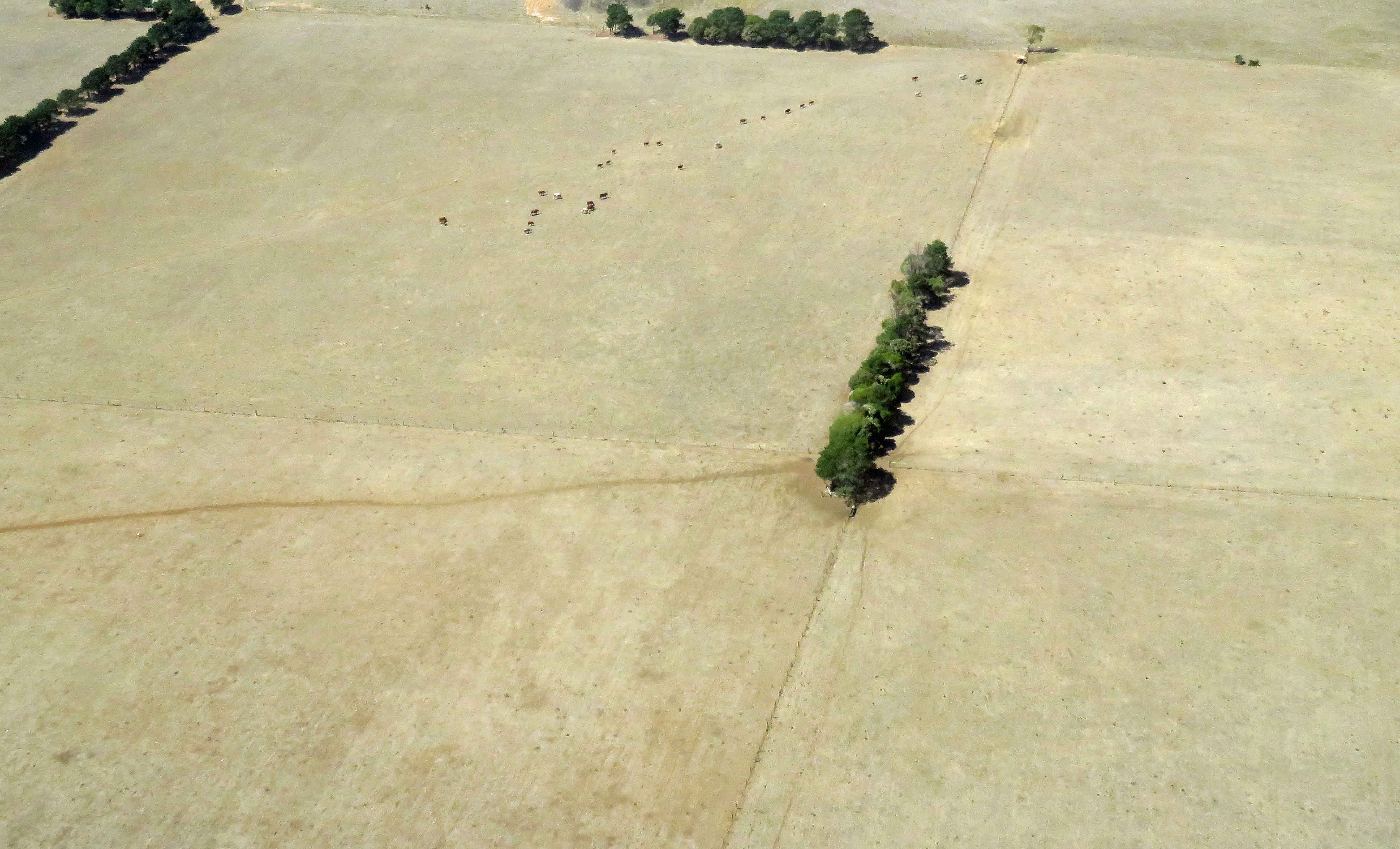
Set stocking (in this photo near Melbourne Australia, a small number of stock are spread out over a large area) . In this system, it is assumed that a certain area can only carry a certain number of animals, i.e. the land has a carrying capacity. Under this system, the livestock tend to spread out (rather than being concentrated in a small area by the threat of predation in the wild). The stock tend to eat only the most palatable forage, and unpalatable weeds then start to take over. Holistic Planned Grazing is a far superior system of livestock/ecosystem management. Photo: David Clode.
Also, a quote from author Mary White, gives a brief overview of some of the advantages of Holistic Planned Grazing, as opposed to set stocking: “The opportunities that exist for changes in grazing management are many and diverse. Maintaining set stocking invariably caused species change in the plant cover and often promoted rates of soil loss greater than soil formation rates. Rotational, time-control, cell, holistic, pulse, high intensity/short time, are all grazing systems that limit the time when plants are exposed to animals. Longer periods between grazings promote greater species diversity and more complex age structure. Longer recovery also increases leaf area index, which could be important for returning ecosystems to a more balanced hydrology. Greater leaf area increases the potential for sunlight capture and thus maximises growth potential using a free and renewable energy source – the sun. Greater leaf area means larger root systems, which adds to soil organic matter and root biomass, both major determinants for prolific soil life. Better ground cover results in more effective use of rainfall, reducing run-off and erosion”.
I would add that larger root systems and more soil organic matter in turn results in greater leaf area, in a synergistic cycle.

The opposite of planned grazing. Erosion as a result of keeping livestock in the same area for long periods of time. Curtain Fig tree road, North Queensland, Australia. Photo: David Clode.
*

Overgrazed hilly landscape in China. The horizontal paths or terraces made by livestock are just visible. Photo: Qingbao meng on unsplash.com.
*

Gully erosion caused by allowing livestock access to a steep area where it would have been better to leave the forest intact and fence off the area. SFT could fix this. Cathedral Fig road, Atherton Tablelands, North Queensland. Photo: David Clode.
“Rotational grazing methods have the capacity to swing the successional balance in favour of perennial plants, whereas set stocking generally favours annuals. Increased root biomass with a litter layer at the soil surface creates conditions favourable to soil micro-organisms which recycle nutrients and create stable aggregates. Mycorrhizal fungi enable increased nutrient availability and also provide an extended interface for moisture retention and water uptake.” (White, 2003). See Mycorrhizal fungi photos below.

Mycorrhizal fungi, pine seedling. Photo: aberdeenmycorrhizas.com.
*
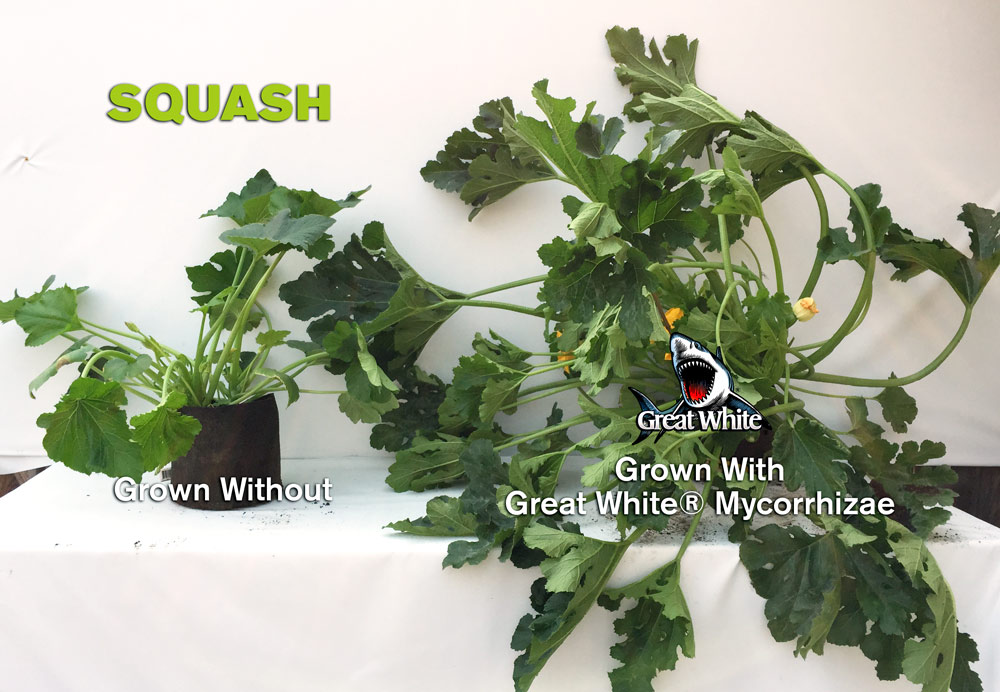
Squash grown with mycorrhizal fungi on the right.
*

Basil grown with mycorrhizal fungi on the right.
The following article about repairing eroded gullies using planned grazing (“Small Farms” magazine, Nov.2012, by David Mason-Jones) shows a practical example of the outstanding results that can be achieved in reforestation/revegetation using planned grazing. Even better and quicker results could be achieved using the SFT, (see further down this page) adding selected appropriate soil improvers, beneficial micro-organisms, and seeds of superior/improved fast-growing, deep-rooted grasses, groundcovers and fodder trees. Click below for this interesting article on fixing eroded gullies using planned grazing: repairing eroded gullies with planned grazing .
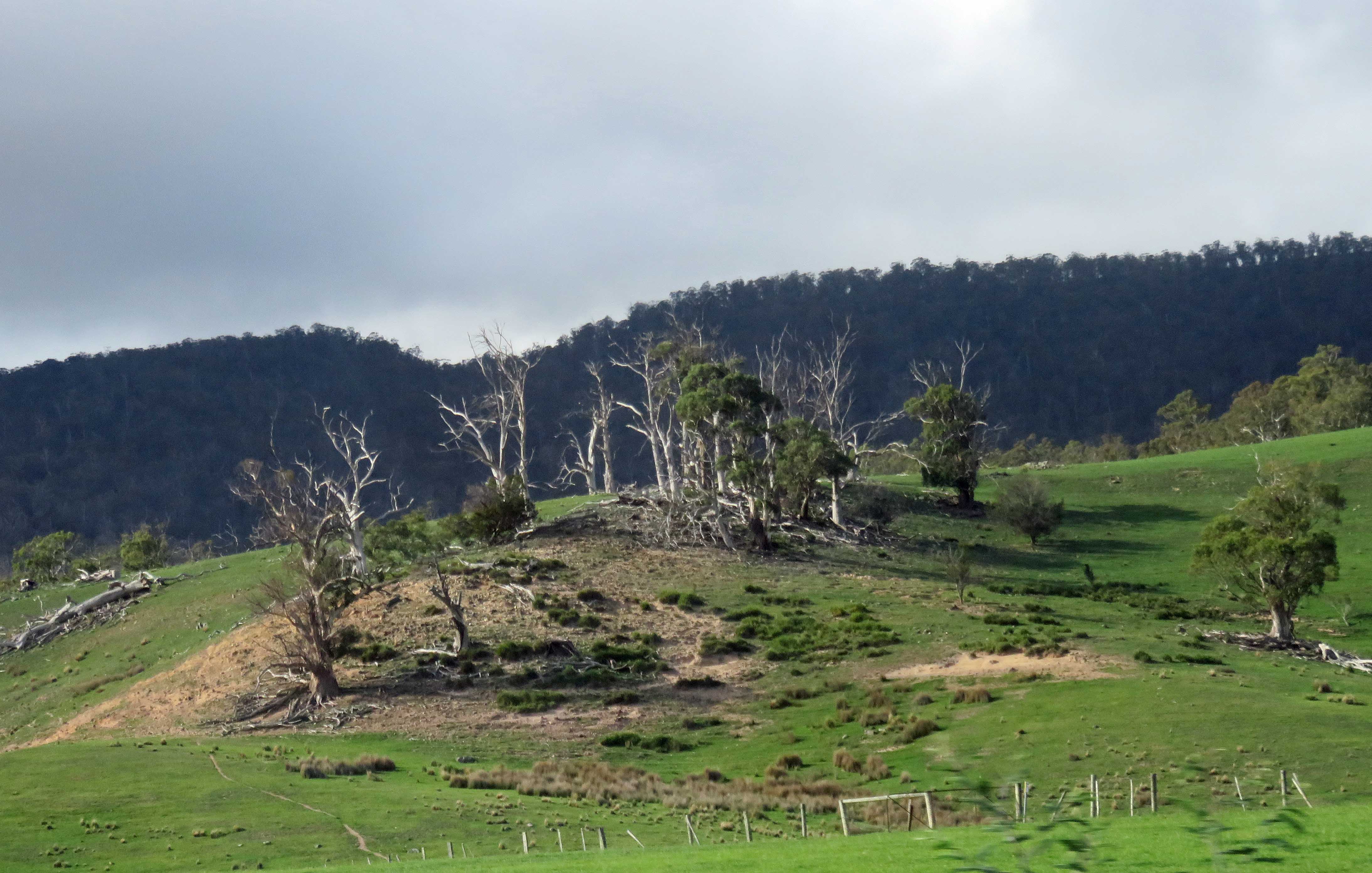
Erosion, weed invasion (Ulex europaeus) and eucalyptus die-back, North-East Tasmania. Photo: David Clode.
*
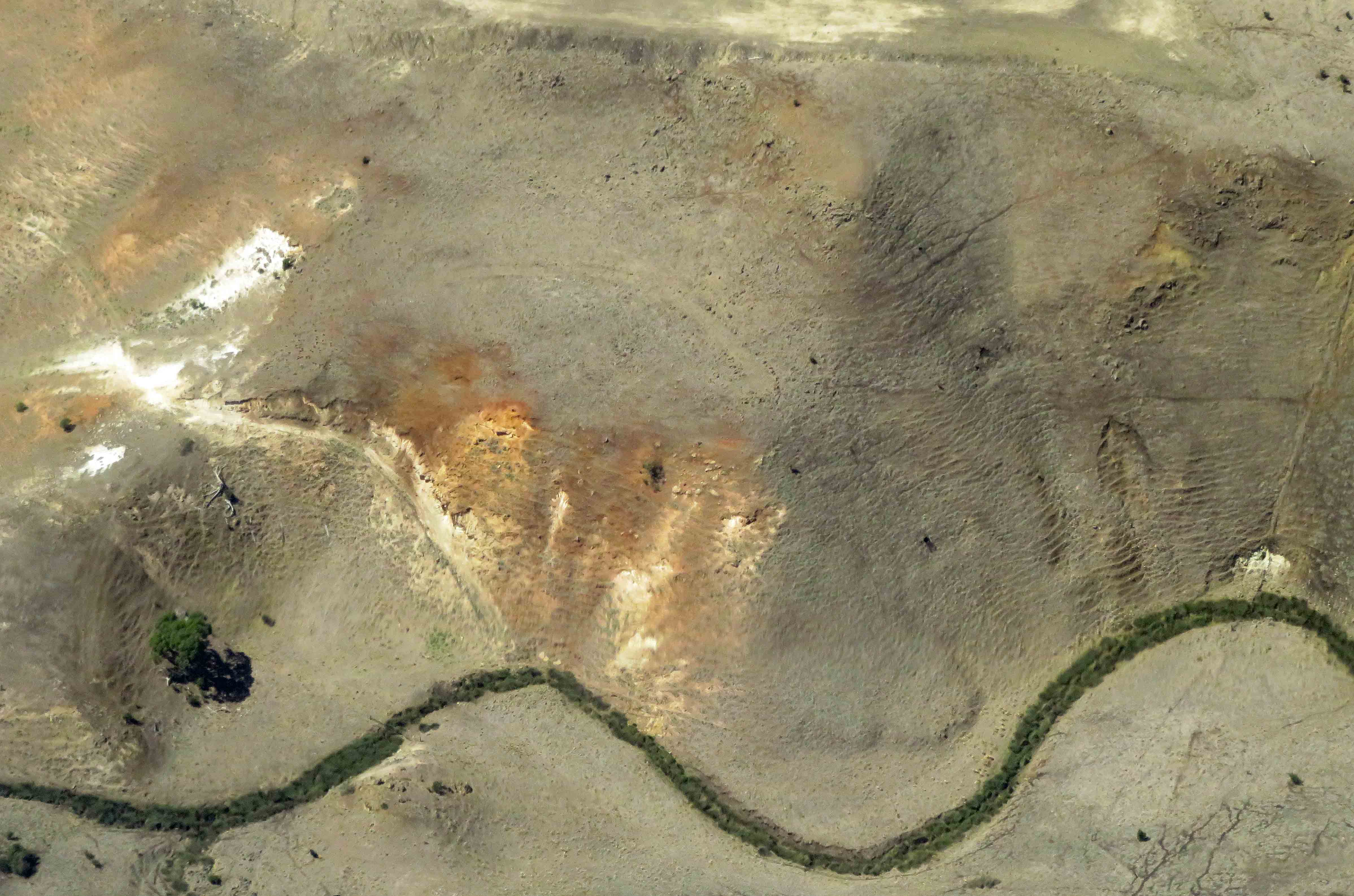
Erosion gullies forming on steep slopes due to set stocking and overgrazing near Melbourne Australia. This will only get worse, unless the management system is changed for the better. On closer inspection (a left click will bring up a larger photo), a stepped terracing effect can also be seen on the steeper slopes, caused by livestock. Photo: David Clode.
***
SFT (Supplemented Fodder Treatment) continued
“Most trees in the tropics reach their place of growth via the gut of an animal” Corlett and Hau (reference at the bottom of the page).
Faecal seeding or fecal seeding
Mixed in with some fodder, livestock could be fed with seeds, for reforestation, or ecological restoration, or pasture improvement. Deep-rooted, fast-growing grasses, ground covers, herbaceous plants, shrubs and trees (including fodder trees, preferably some of them nitrogen-fixing) could be selected, depending on the desired outcome. Hard-seeded legumes and small seeds fed to larger animals, e.g. cattle, tend to work best. The seeds that survive passage through the animal, are then dispersed in their manure, to create a multi-storey grassy woodland/forest, if so desired.

Feeding hay to cattle. Seeds, such as hard-seeded legumes, could be added to the fodder, to be dispersed later in the livestock manure. Ai generated image.
An initial treatment might just be seeds of small-seeded grasses, herbaceous legumes, shrubs and ground covers to build up biomass, soil organic matter and reduce erosion, with later treatments adding tree seeds, when the soil is improved.
Alternatively, grasses and herb seeds could be fed to some animals, and tree and shrub seeds to other individual animals. This will help to spatially separate the grasses/herbs from the trees, since grasses/herbaceous plants are likely to compete with tree seedlings and retard tree growth in the early stages of establishment if they are growing close together.
At present, faecal seeding has been most successful with legume species, in particular species with small seeds and a hard seed coat (e.g. clovers, Lotus, vetches, Desmanthus, and possibly Sesbania spp., Acacia spp., Crotalaria spp., Desmodium spp., Leucaena, Calliandra spp., etc.).
For more on faecal seeding, search for Cameron Griffin faecal seeding on YouTube.
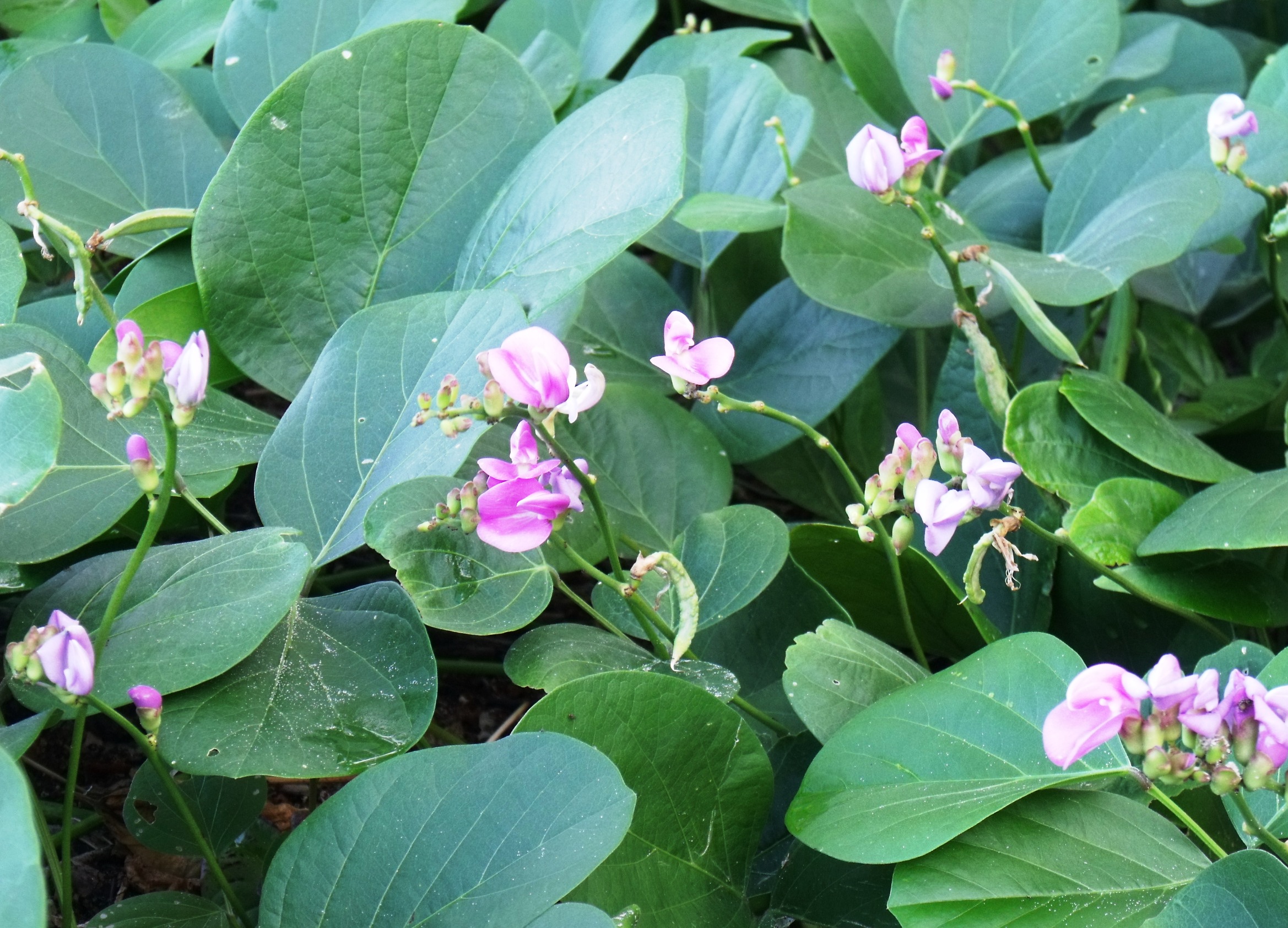
Canavalia maritima, a nitrogen-fixing ground cover.
*

Flowers of Lablab purpureus, a nitrogen-fixing ground cover and climber. Photo: David Clode.
*
Feeding biochar to cattle followed by the incorporation of the biochar/manure into soils by dung beetles has now been tested and proven to work. See the scientific paper by Joseph et al further down this page. See also Doug Pow on the channel Sustainability Western Australia on YouTube and Dr. Bernard Doube (search for Bernard Doube dung beetles on YouTube).
In addition, they could be fed with spores of beneficial micro-organisms such as suitable nitrogen-fixing bacteria and mycorrhizal fungi, or topsoil/roots containing these.

Asian farmers feeding hay to cattle. Supplements such as deficient nutrients and biochar could be mixed in with fodder, and dispersed by the livestock, to improve soils, and thereby plant growth and overall productivity. Ai generated image.
All these supplements/soil improvers, seeds and micro-organisms would be mixed into palatable fodder, (such as haybales, cut branches from fodder trees, silage, sprouted barley grass) with diluted molasses, glycerin or other syrup (or perhaps salt, or perhaps sugar cane juice) added to entice the stock to eat it.
Hydroponic fodder:
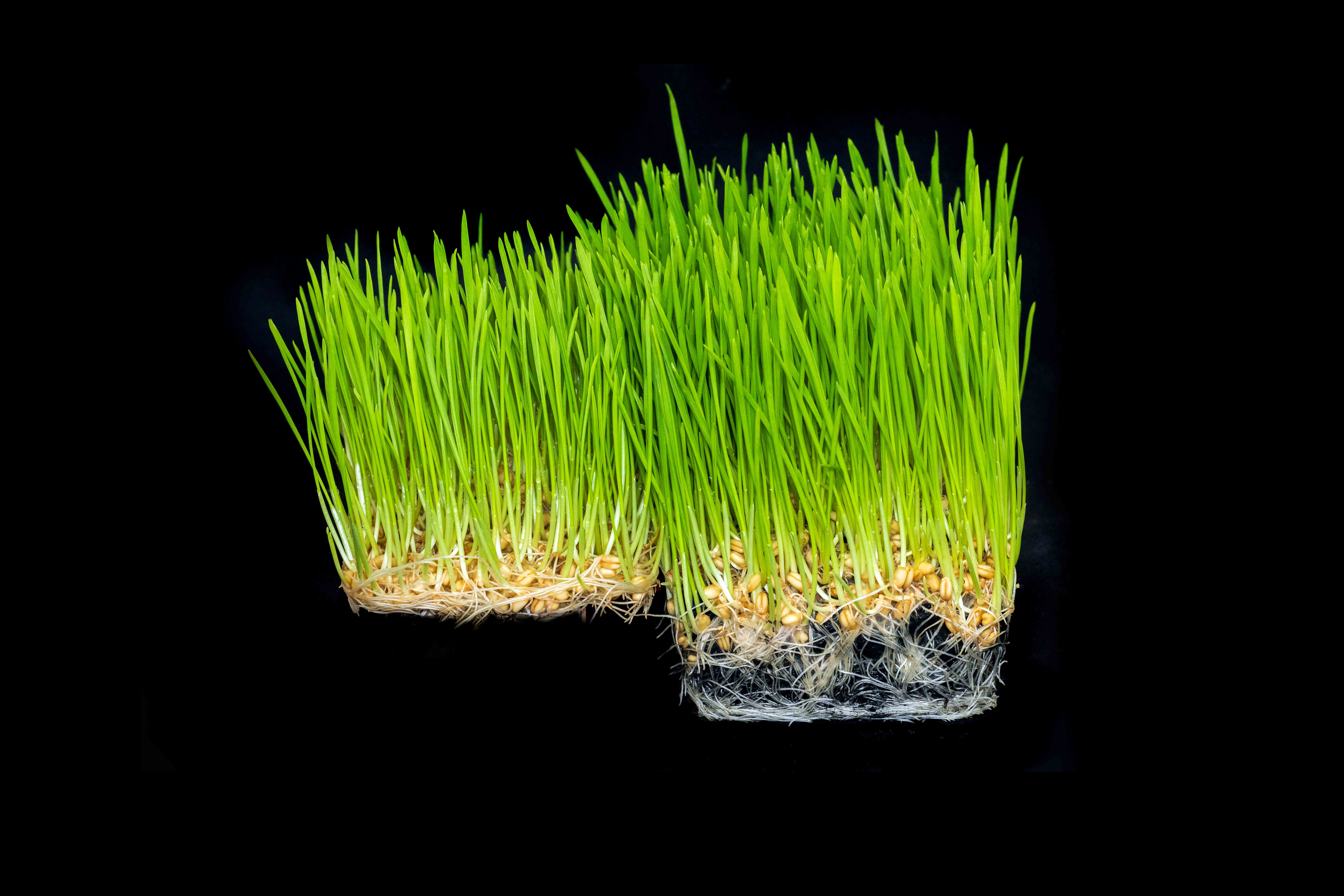
Sprouted seed fodder, often referred to as hydroponic fodder, has become very popular in recent years, with plenty of helpful videos on the subject on YouTube, for example, the channel called Grandeur Africa. This fodder would be ideal for mixing with supplements/soil improvers and feeding to livestock. Seeds could also be sprouted in trays which have biochar and perhaps brown coal dust, seaweed, rock dusts in them, and the whole fed to livestock.

Supplementary fodder such as sprouted barley grass can be sprouted in trays, broken up into pieces, mixed with soil improvers and seeds, and fed to livestock to disperse the seeds and soil improvers in their manure. This photo shows sprouted wheat grass grown in cocopeat in plastic trays. The sprouts could be grown in a medium of soil improvers, e.g. biochar, brown coal, clay, topsoil containing beneficial micro-organisms. Photo: David Clode.
Time is allowed (18 hours or more) for the supplements and seeds to move partially through the digestive tract, so that they are deposited later in the manure in the area to be treated. Stock could be enticed to spend time, concentrated together, in the target area, by placing particularly palatable fodder in the area (or they could be fenced in, usually with portable electric fences, or manually herded). The treatment time could be hours for large numbers of densely mobbed livestock, but a day or two would provide more time for seeds and soil improvers to pass through the animals and be deposited in manure on the ground in the targeted area.
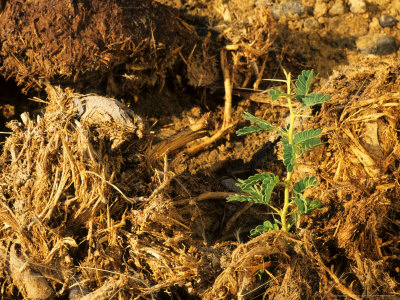
Acacia seedling sprouting in African elephant dung. Photo: creating-a-new-earth.blogspot.com.
*

Legume seedlings germinating in Asian elephant dung, Myanmar/Burma. Photo: Ahimsa Campos-Arceiz. news.mongabay.com.
*
SFT for problem areas as well as opportunities
Some examples or possibilities of problem areas and opportunities that could be treated with the SFT could include:
high ground/the tops of overgrazed hills/mountains, or a strip horizontally on the contour on sloping ground, an eroded gully (see article above), saline or sodic soils, river banks, or perhaps to form a windbreak, strip of fodder trees, a wildlife corridor, corners of fields that are easy and cheap to fence, for reforestation and ecological restoration, to halt the spread of desertification, browsing by goats to reduce wild fire intensity, fecal seeding to replace flammable vegetation with less flammable vegetation, etc. The livestock are then given more fodder with appropriate supplements and seeds, and moved to treat another area, and so on.
Vegetation should be given time to establish (livestock and grazing/browsing wildlife need to be excluded), to a point where it can cope with being browsed/grazed again, which could be as little as a few months for grasses and herbaceous legumes in the wet tropics, and as much as five years or more for trees in drier and/or colder climates.
The area then receives repeated treatments, continually increasing fertility, organic matter, water holding capacity, biomass and biodiversity, as well as ameliorating the local climate (see the “Climate change, epiphytes, water plants” page – click on the button at the top of the page).
Spreading seeds by hand or machine – broadcast and trampling
Another possibility is to broadcast seeds by hand or machine directly onto the ground, and then concentrate livestock in the area. The livestock will eat the vegetation (if the vegetation is mostly weeds, livestock could be used to reduce the vigour of the weeds with intensive, and perhaps repeated, grazing/browsing), and trample the seeds into the soil, while adding nutrients from urine, as well as nutrients and organic matter from manure. On their farm in Devon, Rebecca Hosking and Tim Green “…increase the diversity of the fields by sowing extra grasses, clovers and herbs. The trick is to sow them in the paddock where the animals will be the next day, then they get trodden in”. (Whitefield 2013).
When seeds are fed to animals, there is the problem that some or even all may be destroyed (seed survival is greater for small seeds fed to large animals, and probably hard coated seeds), so spreading seed by hand has the advantage that more seeds will survive, however a disadvantage is that the seeds of some species passing through some types of animals have enhanced germination. Another disadvantage to spreading seeds by hand or machine is that you are doing the work, whereas feeding seeds to livestock/wildlife is working smart, not hard – the animals do the work of spreading the seeds in their normal daily activities.
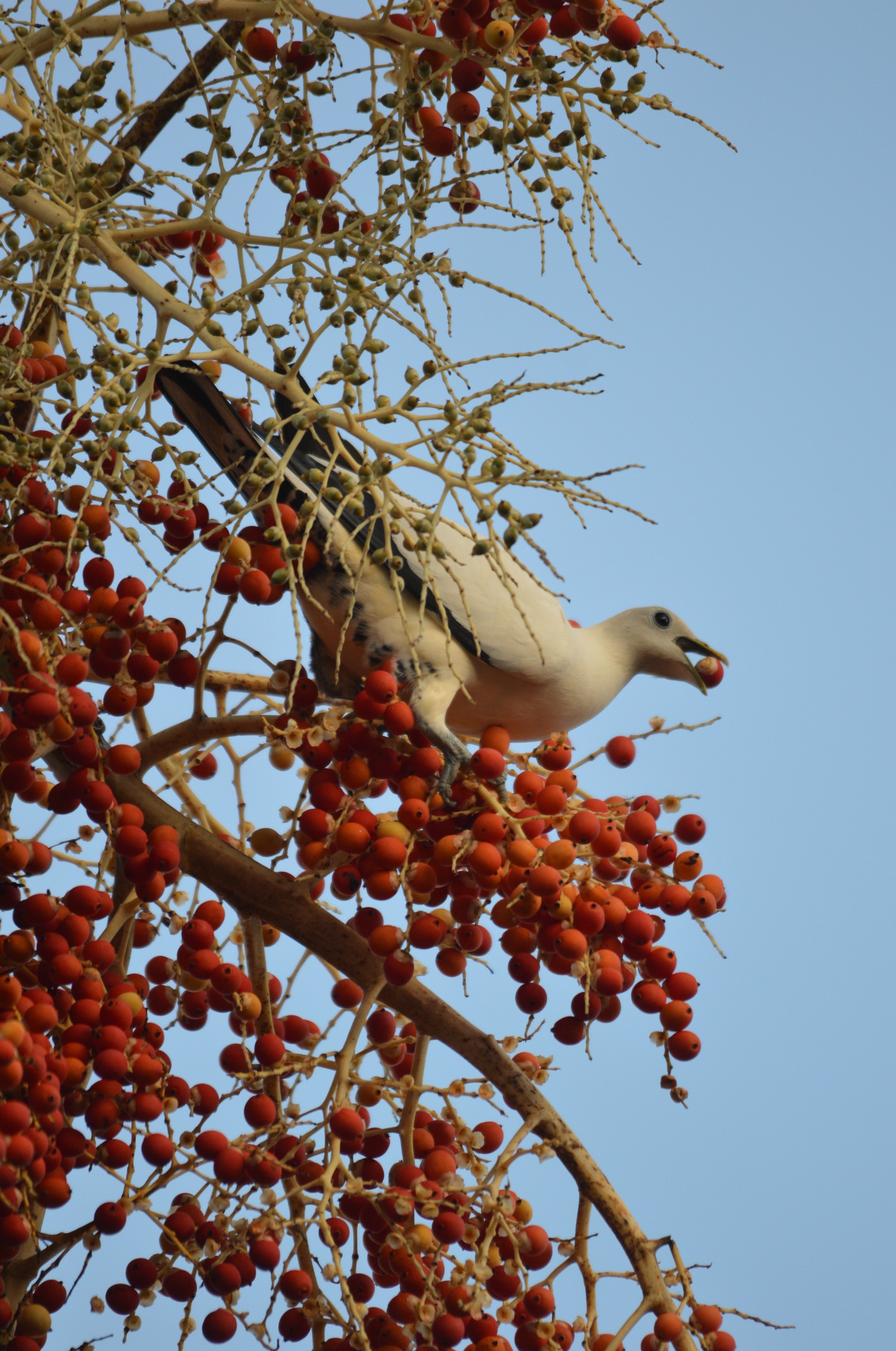
A Torresian Imperial dove eating the fruits of a Carpentaria palm. These birds disperse seeds tens of kilometres away. Photo: David Clode.
“Seeds and fruits eaten by animals may later be regurgitated or excreted unharmed, but some animals destroy most of the seeds they eat. In feeding experiments on a tapir in Costa Rica, Janzen (1981) found that all seeds of one species and 78% of another were killed when ingested. Fruits and seeds are often eaten and dispersed by ground-living animals after falling to the forest floor. Rodents, such as Agoutis (Dasyprocta), make hoards of seeds, some of which may germinate before they are used (called scatter hoarding). In some tropical trees the percentage germination is significantly higher if the seeds have passed through birds, monkeys or bats. e.g. in Cecropia palmata.” (Cecropia species are usually a very important and major component of forest regrowth in Latin America). (Richards 1998). p 110.
More on SFT further down this page.
*
Seed balls
February 2023 update:
Demi-lunes with Zai holes inside them have proven to greatly increase plant growth in the semi-arid Sahel, and seed balls sown inside demi-lunes, or on top of Zai holes within demi-lunes should be more successful then random scattering. See the Zai Holes Page.

Zai hole demi-lune combination (or Zai hole half-moon or multi-functional demi-lune). Photo: from Jean-luc Galabert (cropped and enlarged).
There are also opportunities to use seedballs for reforestation, (see the articles “Direct seeding Faidherbia albida“, and “AID plus seeds”, page 26). See the page Seed Balls page and the Reforestation projects/reforestation methods page on this site for more.
Seed balls (or larger seed bombs) can be useful to place particularly important plants in a specific position which is favourable to the plant and/or people. They can also substitute to some degree for a lack of livestock. See the “Reforestation Methods” page.

Sesbania sesban grown from seed balls. Photo: SeedballsKenya.com.
*

Seed ball infographic from SeedballsKenya.com.
*

Using a catapult to distribute seed balls in Kenya. Photo: SeedballsKenya.com.
*

Seed balls. Photo: growindie.wordpress.com.
*
Over time, these techniques combined (Holistic Planned Grazing, SFT, seed balls and Farmer Managed Natural Regeneration) could be used to not only halt encroaching desertification and ameliorate the local climate, but could even provide a solid base of healthy vegetation from which to revegetate and drive back the desert.
*
As an aside, some Australian Acacias have been used with great success in the semi-desert Sahel region of Africa. The seeds of Acacia holosericea, Acacia torulosa and many other legumes could perhaps be successfully dispersed by livestock, or broadcast and trampled in. For more information, visit www.worldwidewattle.com and http://www.worldwidewattle.com/infogallery/utilisation/sehel.php/, and “Domestication of Australian Acacias for the Sahelian zone of West Africa”. Also,
Australian-Acacias_Full-Report
http://www.beyondsubsistence.org.au/.

A naturally regenerating Acacia holosericea seedling growing in stones and heavy clay subsoil in a hot, sunny environment. James Cook University, Cairns, Australia. The seeds are edible, higher in protein and minerals than grains such as millet, and can be stored for years. It is also one of the toughest and most adaptable of tropical Australian Acacia species.
*
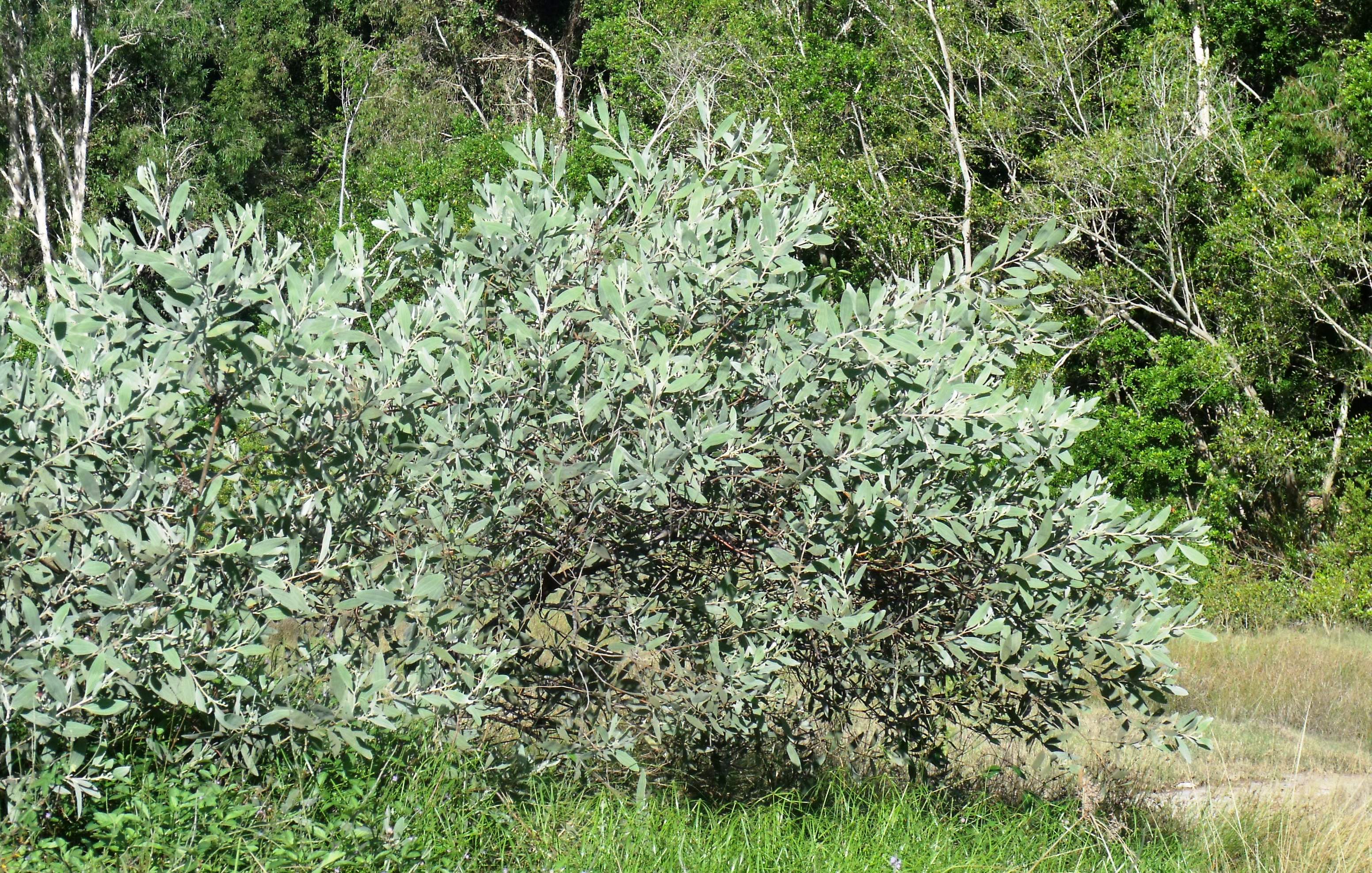
Acacia holosericea is very adaptable, in this case coping with a challenging saline waterlogged environment near mangrove forest.
*
“The greatest service which can be rendered any country
is to add a useful plant to its (agri)culture”
Thomas Jefferson, circa 1800.
*
Acacia holosericea (prev. A. colei), Acacia torulosa and other Australian acacias have proven to be fast growers in the Sahel region of West Africa (they produce much more leaf litter and fuel wood than local Acacia species – about 3 x more). They provide high protein edible seeds, used to enrich human diets, and can be stored for years and so improve food security. They can also be used as supplementary feed for poultry, and possibly as part of a long-term mixed, improved fallow, as a substitute for Sesbania sesban for example, which would be used in wetter areas. They also provide leaf mulch (and potentially compost for Zai holes) and fuel wood, and can be used as windbreaks to increase the productivity of millet or sorghum crops.

Acacia torulosa, tree form, Sahel region, West Africa. Photo: Tony Rinaudo. Worldwidewattle.com.
These Australian acacias, plus indigenous acacias and Faidherbia could be established utilising livestock to disperse the seeds, either as faecal dispersal, or broadcast and trampled, along with suitable soil improvers (e.g. nitrogen-fixing bacteria, biochar, trace elements).
Windbreaks could be created, if livestock are confined to a strip, or a tethered animal could produce a circle of a mix of improved fallow species, including perhaps A. torulosa, for a circle of crops to follow once the soil is improved. Faidherbia seeds could be sown in the centre, with a circle around it of a few metres free of plants, so that the Faidherbia tree can establish quickly with no competition. As the Faidherbia tree matures, the productivity of the crops beneath it’s canopy will increase. See Direct seeding Faidherbia albida in the Sahel final. The demi-lune with Zai holes inside it may prove to be the best way to establish Faidherbia albida trees. The demi-lune/Zai hole combination would also recharge groundwater which should help to establish Faidherbia, and other plants.
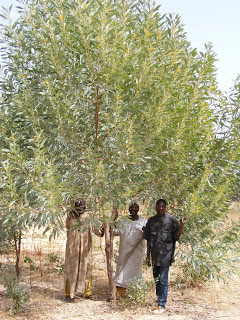
Acacia holosericea in Niger, Sahel region, West Africa. Photo: Aaron Thacher. Sahelpath.blogspot.com.
*
The SFT (Supplemented Fodder Treatment) continued…
Livestock can be used to disperse seeds of desirable plants, for example, deep-rooted, high biomass grasses (e.g. Guinea grass) and preferably nitrogen-fixing trees (e.g. Faidherbia albida, Leucaena leucocephala, Calliandra spp., Sesbania spp. Samanea saman), shrubs and pasture legumes.
Ideally the trees and grasses selected would be complementary species, and the trees would provide fodder in the form of leaves accessible for browsing, or which fall to the ground, or drop nutritious pods. Livestock which are non-selective feeders, i.e. that eat leaves, pods, herbs and grasses would be ideal, to make the most of all the feed (e.g. goats, Bali or Galloway cattle, eland).
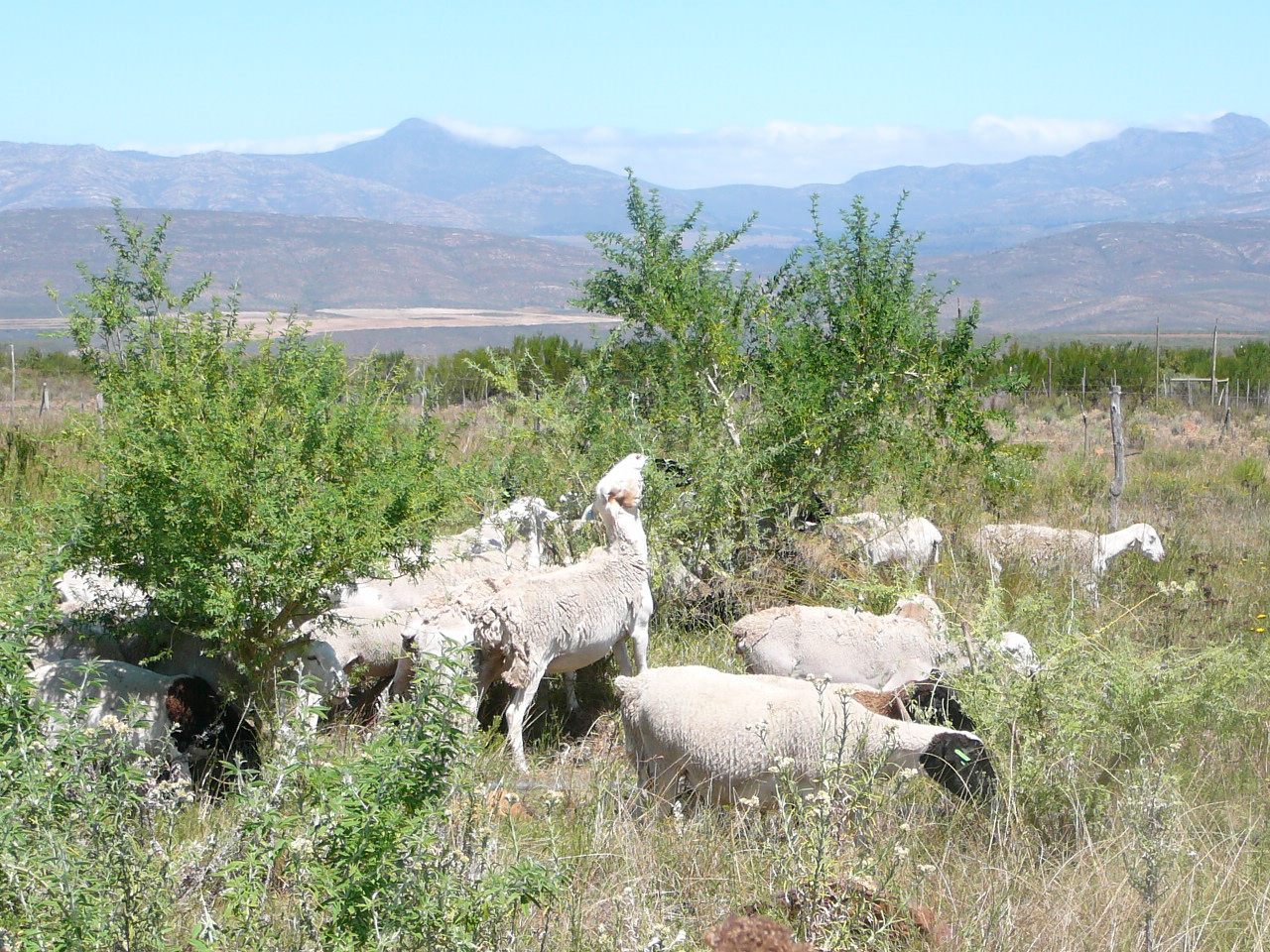
Sheep feeding on tree lucerne (Tagasaste) in South Africa. According to Tropicalforages.info, this tree can produce up to 11t/ha/yr DM, which is very high for a Mediterranean climate plant. Photo: Myles Esterhuizen, (South Africa), Lucernetreefarm.WordPress.com.
In a planned grazing system, livestock can be bunched together, to treat an area with their dung and urine (speeding up the recycling of nutrients and organic matter from standing, often dead vegetation and returning it to the soil more quickly because it is in contact with the soil and has been chewed into finer particles), break up soil crusts, and add soil improvers/fodder supplements and seeds at the same time, the combination of which will dramatically improve soil fertility, seed establishment and promote vigorous plant growth.
The livestock can also be fed with appropriate nitrogen-fixing bacteria bacteria and mycorrhizal fungi, so that seedlings establish better and grow faster. The supplements/soil improvers could include things such as such as deficient nutrients including trace elements, clay where soils are sandy, rock dusts such as rock phosphate, dolomite, basalt dust, biochar to add long-lasting organic matter and reduce methane and nitrous oxide emissions, etc. Seaweed feed and azolla also reduce animal emissions.
In nearly every environment, the supplemented manure will be incorporated into the soil, either by dung beetles, earthworms, termites, or all three.
*
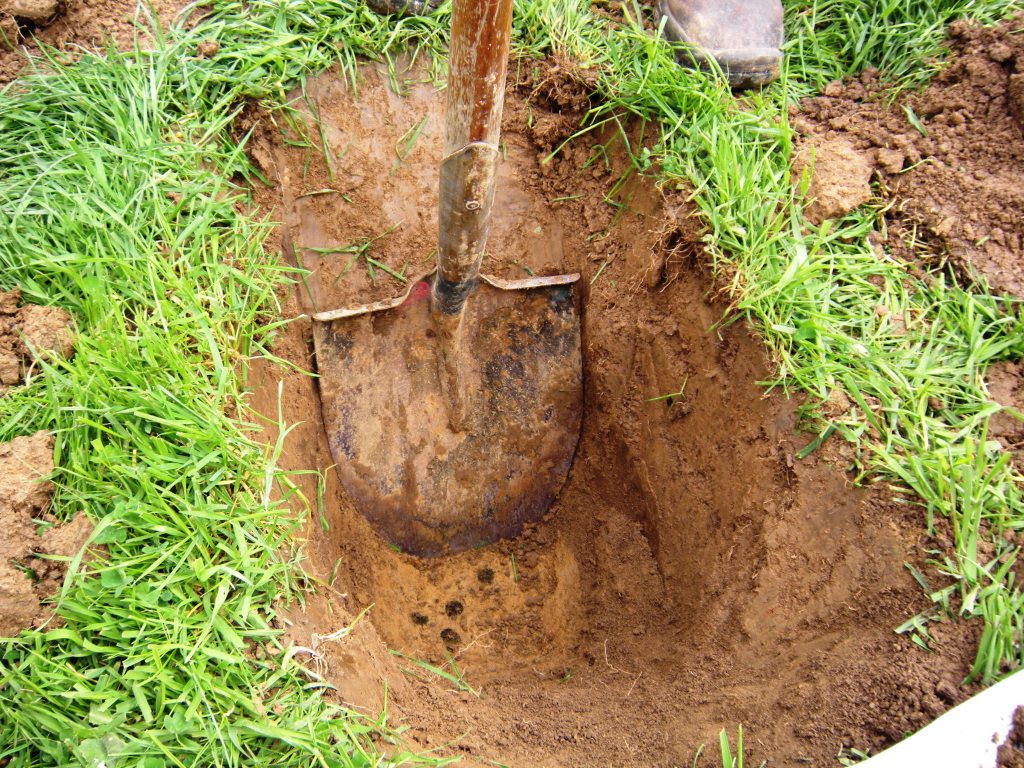
Dung beetle tunnels extending deeper than 60cm. (Bubas bison).Photo: northeast.landcarevic.net.au
*
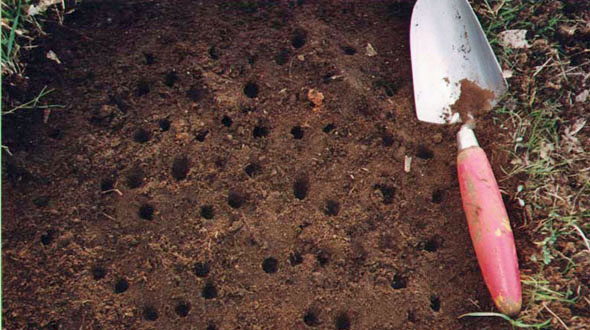
Dung beetle tunnel entrances. Photo: John Feehan, http://www.dungbeetleexpert.com.au.
Dung beetle tunnel entrances.

Tunnels made by earthworms and dung beetles increase air and water infiltration and provide passages for root growth. Photo: tipjunkie.com.
The net result of applying this system (SFT with HPG) will be a high standing biomass of vegetation, prolific soil life, and a long-term (hundreds or thousands of years) improvement in soil fertility. Treatments can be repeated as necessary for synergistic and ongoing improvement to soil fertility and increases in biomass, and biodiversity.
With repeated treatments, semi-arid areas of sparse grasslands could likely be converted into grassy open woodlands, and in wetter areas, grassy open woodlands to denser forests with a grassy understorey.
With more biomass production, more fuel wood is produced which can be used in fuel-efficient stoves, producing more biochar/charcoal and ash, which can be fed to livestock to add to the soil (via dung beetles and earthworms), providing ongoing increases in decay-resistant carbon storage and long term soil improvement.
Ultimately, presently degraded land could become healthy rangeland, and similar to natural forests if a diversity of trees and middlestorey and understorey species are established. Existing rangeland could even become arable land in time, increasing agricultural productivity, and so reduce pressures to cut down, burn, or graze natural forests.
Land which may have been abandoned because of degradation by poorly managed livestock could quickly be rewilded using the SFT and HPG. Increased agricultural productivity on less land could also mean that land could be spared for rewilding.
See the article: aid-savory-3rd.

Seeds germinating in Cassowary dung. North Queensland Australia. Photo: Damon Ramsey.
Many plant species in many ecosystems rely on animals to disperse their seeds. This photo shows rain forest seedlings germinating in a pile of cassowary (a large bird) dung, in North Queensland, Australia. The seeds of at least one hundred rain forest plants are dispersed by these birds (some sources suggest over 400 spp.), and the dung piles may weigh up to one kilogram. In Tanzania in Africa, a pile of elephant manure was weighed and came in at 8 kg’s, and contained 12 000 Acacia tortilis seeds.
Clearly, domestic livestock can be managed to play a major role in reforestation projects, agroforestry and regenerative agriculture.
*
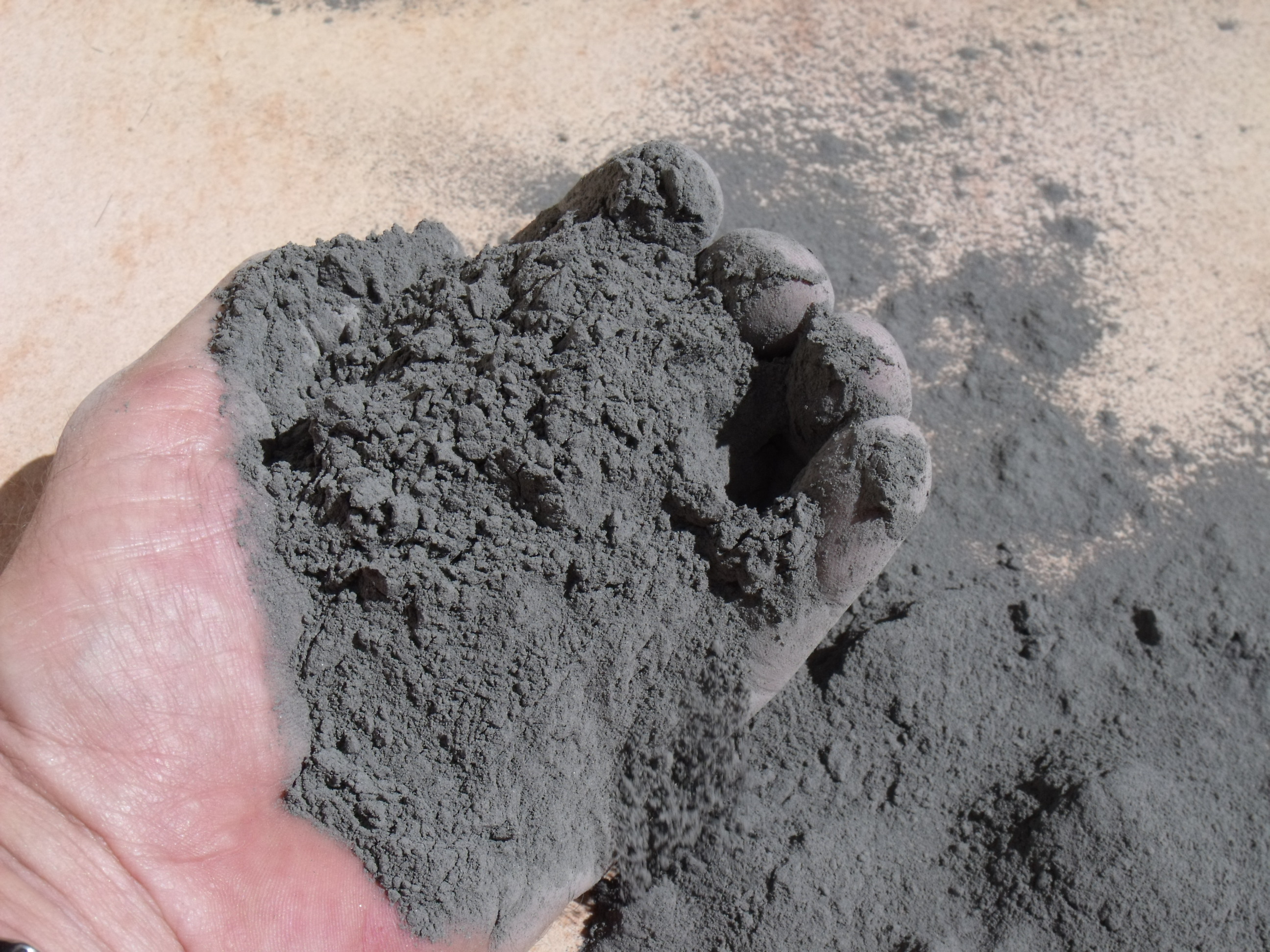
An example of a rock dust, made from volcanic basalt rock. This has been tested in North Queensland by James Cook University, and proven to provide long-term improvement to a variety of soils in a wet, tropical climate. Reforestation.me.
A fodder supplement. Crushed Basalt rock, an example of a soil improver/fodder supplement. The powder can be fed in small amounts to livestock (mixed in with fodder). Basalt dust has been proven to increase the fertility of leached tropical soils in North Queensland (see also Peter Van Straaten, “Farming with Rocks and Minerals”). It could be combined with humates to quickly rejuvenate and build soils.
Other possible fodder supplements (which could be dispersed by livestock) include clay (for sandy soils), nitrogen-fixing bacteria and mycorrhizal fungi and any other beneficial soil life (from commercial sources or possibly from dug-up plant roots and topsoil), biochar/charcoal (which could come from fuel efficient stoves, and be dispersed by livestock), as well as other rock dusts such as gypsum, lime, dolomite, rock phosphate and glacial deposits, seaweed meal, and deficient trace elements (see Engel, 2002, below). Another possibility is bone char for phosphorus.
The supplements would be selected on the basis of a soil test, what is good for livestock health, and according to what is available, and the costs involved.
***
Adding trees to pasture to increase livestock productivity

Galloway cattle like to eat tree leaves as well as grass. Photo: courtesy of Chris Stuart, www.gallowaysaustralia.com.au
Livestock which browse the foliage and pods of trees and shrubs as well as graze on grass, can produce much more meat and other products because there is more feed available to them. Higher stocking rates become possible, and increased productivity that comes with a sheltered, treed, environment.
A newspaper article in the Cairns Post (cairnspost.com.au April 14 2021, page 24, by Bronwyn Farr) reports on a trial in North Queensland Australia, where Leucaena leucocephala fodder trees were added to native pasture (which was already lightly wooded) at 10 metre spacings. The results were amazing: “steers in a leucaena paddock were gaining 600g per day compared with 300g for steers on pasture”. In other words, productivity was doubled!

Goats graze grass and browse leaves. Reforestation.me.
Galloway cattle, as well as Bali cattle, goats and the African eland antelope, are all browsers as well as grazers. The livestock can of course be used to disperse seeds and soil improvers themselves, to improve the pastures, add trees and middle-storey shrubs, and continuously improve the soil, all resulting in increased stocking rates/productivity, and carbon fixation.
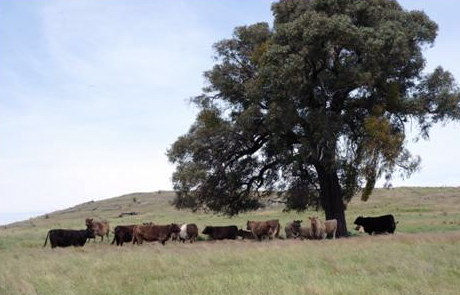
A typical scene in Australia and many other places. Galloway cattle gathered under one of the last remaining trees, seeking shelter from extreme weather. Photo: courtesy of Chris Stuart, www.gallowaysaustralia.com.au.
*
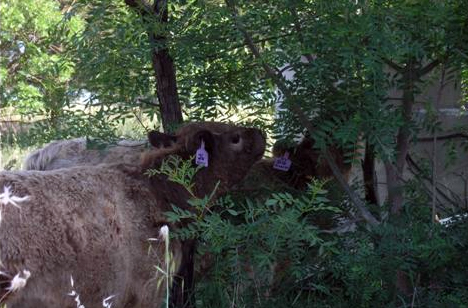
Fodder trees. The right trees can provide shelter, fodder from the foliage and pods, and combined with the right grasses, can increase pasture productivity, and so increase livestock productivity, carbon fixation, and improve soils.
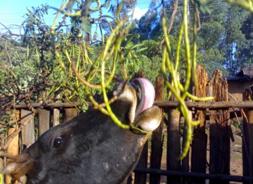
Cow eating Sesbania seed pods. Photo: esgpip.org.
Cow eating Sesbania sesban seed pods, Ethiopia.

Bali cattle eat grass as well as the leaves of trees and shrubs. Timor Leste. Photo: Colin Trainor, commons.wikimedia.org.
*

Bali cattle – the trees in the background have clearly been browsed as high as possible. Photo: Colin Trainor. Wikimedia.
*

Rain trees (Samanea saman or Albizia saman), from South America, produce pods which are high in carbohydrate and protein and edible for livestock and people (like carob in Mediterranean climate regions), fix nitrogen and so improve soil fertility, and some grasses grow better underneath its canopy. Crops and grasses can be more than twice as productive growing under the canopy of nitrogen-fixing trees. This has been proven with Faidherbia albida in Africa, and Prosopis cineraria, in India, for example.
So, not only can trees provide more food for livestock in addition to grass, but some tree species can also increase grass growth, providing even more food for livestock.
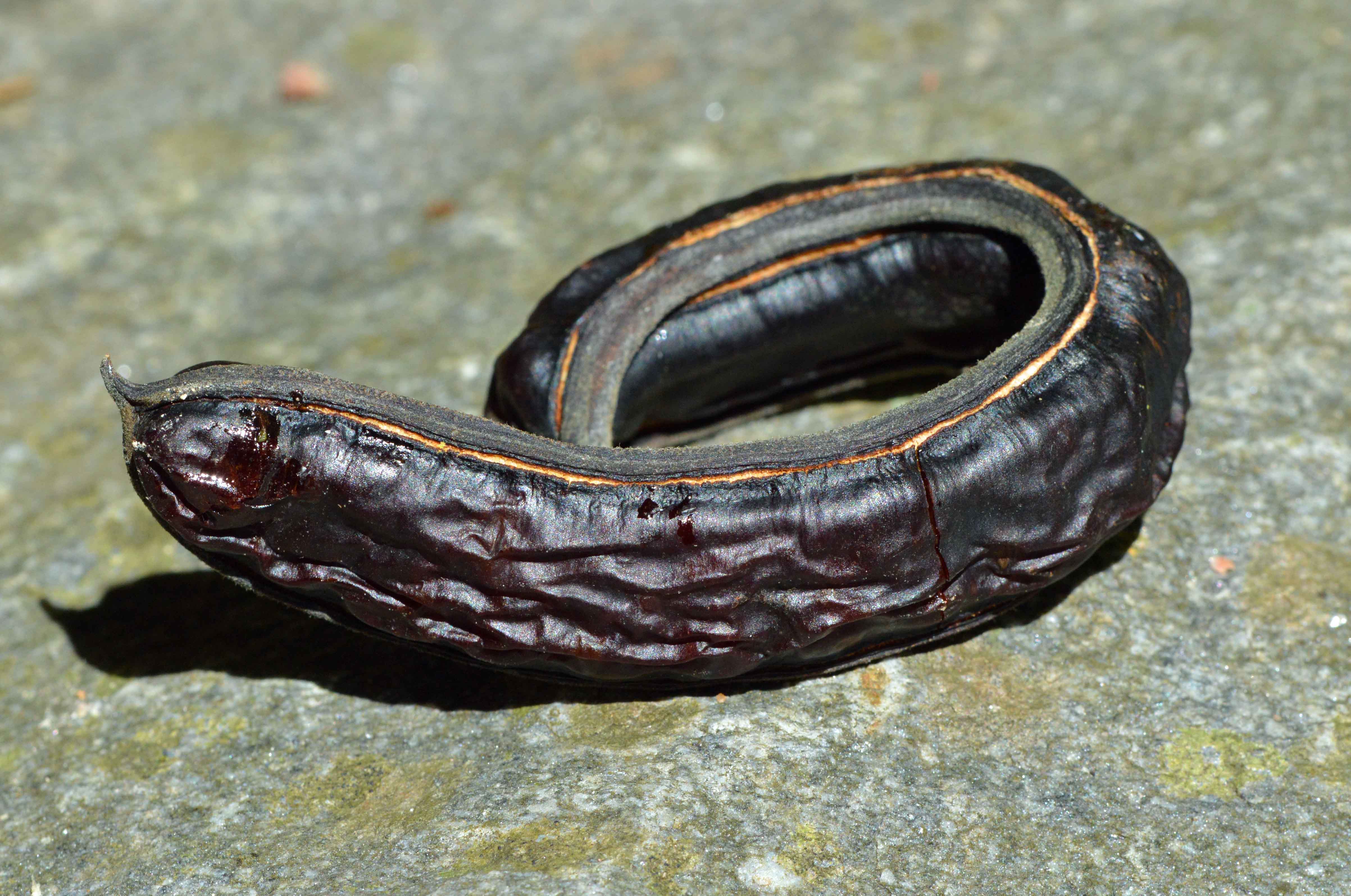
Rain tree Seed pod. High carbohydrate and protein, and tastes sweet (a little like dates) and eaten and distributed by livestock and wildlife. Photo: David Clode.
Seeds, or whole seed pods of these trees can be fed to livestock to disperse in their improved manure, and so grow more trees which provide more pods for fodder in the future. The seeds germinate easily, and are also likely to establish successfully using seed balls.
Rain trees can also be grown from cuttings (branches up to 2 metres long) pushed into the ground, early in the wet season. They can be coppiced, to allow more light in for pasture growth, and the coppice growth thinned and used for timber or fuel wood. Rain trees have been used successfully in reforestation in Central and South America, and Indonesia.

Leucaena leucocephala seed pods. A nitrogen-fixing fodder tree which increases soil fertility, but can be a weed. With some trees, whole pods or fruits could be fed to livestock to disperse the seeds. Leucaena can be direct seeded for reforestation, but it is susceptible to some pests and can be invasive outside of its natural range.
*
Overstorey trees can be coppiced occasionally, to allow more light in for the growth of understorey plants.

A pollarded rain tree. Photo: David Clode.
A pollarded rain tree.

The flowers of Giricidia sepium, Madre de cacao. This tree is popular in agroforestry, and is often used to provide shade for cocoa and coffee, but also for living fences, and intercropping with maize to provide nitrogen-rich mulch and good quality fuel wood. This tree has the advantage of being able to be propagated by pushing large “stump/stake/truncheon” or “quick stick” cuttings directly into the ground, early in the wet season. The cuttings can be placed diagonally into the ground and intertwined to form a living fence. It is also a fodder tree, a useful reforestation species, and the seeds can be used as a rodent poison (so it is probably not suited to ingestion and dispersal by livestock). The flowers provide nectar for wildlife. For more info on Gliricidia see PROSEA no. 11, Auxiliary plants.
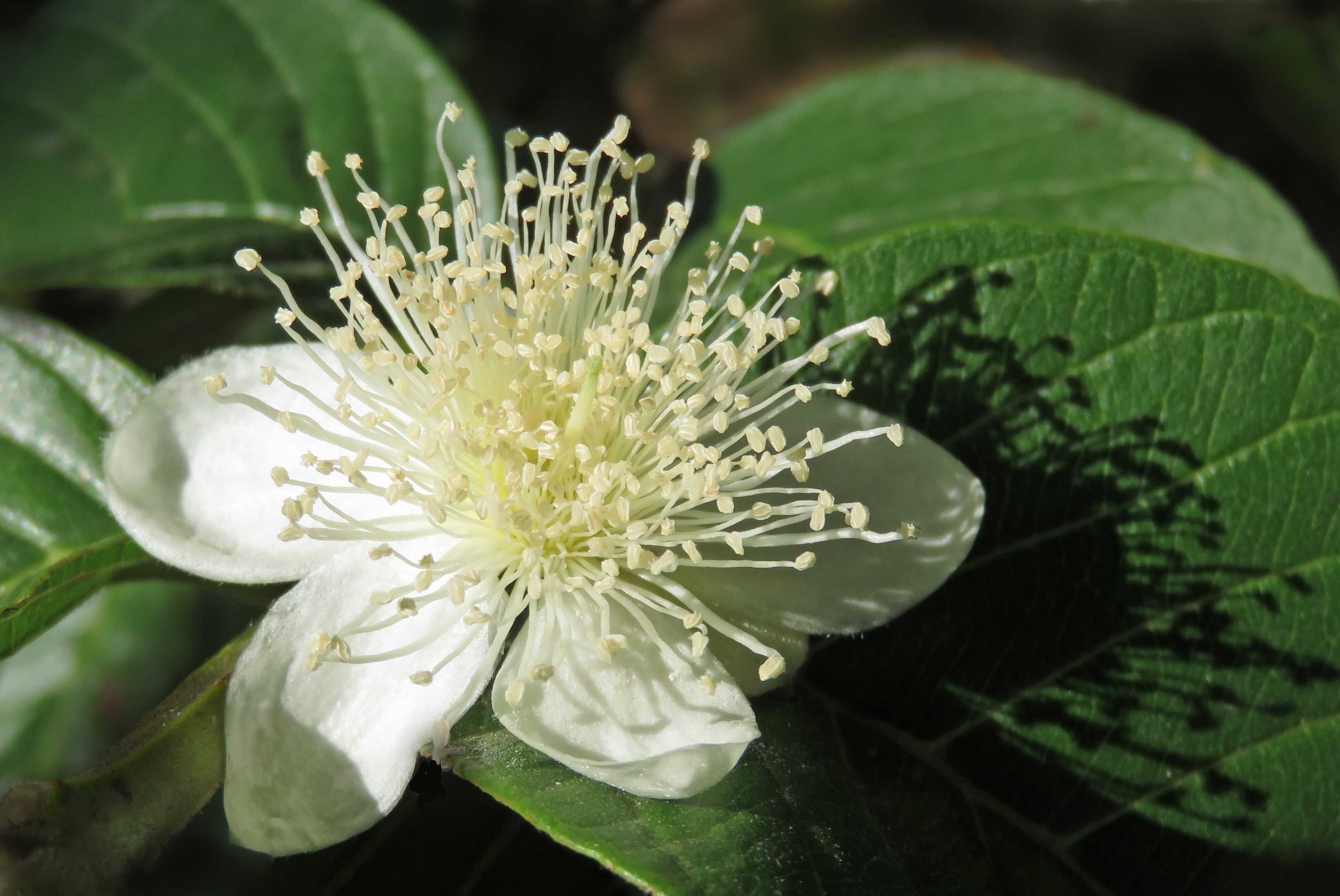
Guava flower, Psidium guajava. Where it is native, guava fruits could be fed to livestock or wildlife to disperse the seeds (it can be a weed where it is not native).
*
Conclusion
We are repeatedly told, in the style of Joseph Goebbels, that carbon dioxide emissions from human activity cause catastrophic climate change, constituting an existential crisis. At present it is disappointing that there are many techniques, including the SFT (Supplemented Fodder treatment), which are available to achieve quick and synergistic results in regenerative agriculture, agroforestry and ecological restoration, including carbon storage in soils (biochar for thousands of years), and increased plant biomass and soil life, which are barely noticed, used, or even suppressed.
If the money spent on climate change conferences, which is billions of dollars annually, was spent on HPG and SFT, phenomenal long term results in carbon sequestration, soil improvement, agricultural productivity and ecological restoration could be achieved.
At best it is a mystery as to why this has not been widely and speedily adopted and funded. At worst, there are vested interests in maintaining the fear mongering and suppressing solutions.
For those with objective and open minds, extra carbon dioxide in the air provides an opportunity for regenerative agriculture, reforestation, soil improvement, and ecological restoration and enhancement.
David Clode B. App. Sc. (Hort.), Certificate Permaculture Design.
Thanks for visiting.
***
Some references
s42773-023-00287-xEarthwormsBiochar
supplementary-feeding-of-cattleDPINSW
Carter, Robert; Spooner, John. 2013. Taxing air: facts and fallacies about climate change. Kelpie Press.ISBN 9780646902180. Pge. 112.
Corlett, R. T. and Hau, C. H. “Seed dispersal and forest restoration”.
Engel, Cindy. (2002). Wild Health. How animals keep themselves well and what we can learn from them. Weidenfeld and Nicolson. ISBN 0 297 64684 2.
McIntyre, S., McIvor, J. G., Heard, K. M. (Editors).(2002). Managing and Conserving Grassy Woodlands. CSIRO Publishing. ISBN 0 643 06831 7. Pg. 11.
Richards, Paul W. 1998. The tropical rain forest: an ecological study. Cambridge University Press. ISBN 0 521 42194 2 (pbk). Pg. 110.
Savory, Allan and Butterfield, Jody. (1999). Holistic management: a new framework for decision making. 2nd ed. Pg 514.
White, Mary E. (2003). Earth alive!: from microbes to a living planet. Rosenberg Publishing Pty Ltd. ISBN 1 877058 05 x. Pg. 130.
Whitefield, Patrick. 2013. “Ecological farming”. Permaculture magazine No. 77 Autumn 2013, pg. 50.
*
Reforestation.me
 Reforestation.me
I agree with your comments about the benefits of nonselective grazers — it has been an interest of mine for a while –hence my collection of photos of Galloways browsing on trees. Ditto for the benefits of dung beetles for putting nutrients into the soil. Our association recently held a “dung beetle field day” with John Feehan –association writeup ison our website. David Mason Jones of “Small Farms ” magazine attended and also wrote an article which apeared in a recent issue. We use compost and sewerage ash on our soils and have found the pasture to be greatly improved by them.
LikeLike
Thanks for your comment Chris, and thanks again for providing the photos of Galloway cattle
Regards
David
LikeLike
We are a group of volunteers and opening a new scheme in our community. Your site provided us with valuable info to work on. You have performed an impressive process and our whole community will be grateful to you.
LikeLike
That is great news, thank you Kirstie.
Good luck!
David
LikeLike
Great goods from you, man. I have be aware your stuff prior to and you’re simply too magnificent. I really like what you’ve obtained right here, certainly like what you are saying and the way in which by which you are saying it. You are making it entertaining and you still care for to stay it sensible. I cant wait to learn much more from you. This is really a wonderful web site.
LikeLike
You have noted very interesting details! ps decent internet site.
LikeLike
I like what you guys are up also. Such clever work and reporting! Carry on the superb works guys I’ve incorporated you guys to my blogroll. I think it’ll improve the value of my website :).
LikeLike
I enjoy your writing style genuinely enjoying this internet site. “What people say you cannot do, you try and find that you can.” by Henry David Thoreau.
LikeLike
I appreciate your comments and feedback, thank you.
David
LikeLike
Can I simply say what a relief to find somebody who actually is aware of what theyre talking about on the internet. You positively know easy methods to convey an issue to mild and make it important. Extra people must read this and understand this aspect of the story. I cant imagine youre no more popular because you undoubtedly have the gift.
LikeLike
This piece of writing will assist the internet visitors for creating new website or even a weblog
from start to end.
LikeLike
Hi to all, the contents present at this web site are truly remarkable for people knowledge, well, keep up the good work fellows.
LikeLike
e are having a problem here on Bonaire and can use some assistance. There is a planed extinction of A genetically special Donkey from the wild by so called biologists claiming they are destroying all the vegetation. They are advising the government and we need to stop this. The Donkey Sanctuary Bonaire is a big part of the eradication
, We Citizens For Better Safer Animal Friendly Bonaire can use any and all the help possible. what to do???? I can be contacted at savebonairedonkeys@hotmail.com or you can check bonairewilddonkeys,com on facebook for more contacts.
LikeLike